Foxhole Six-Sixty-Two « Lucas X. Wiseman Short Story
Foxhole Six-Sixty-Two had been dug for two people, but there were nine of us pressed inside.
I was near the middle, desperately crawling to get away from the howling shells that fell like God’s own wrath, hunting for our souls. I was crushed between both the Scouts closer to the entrance who pressed away from the falling death with all their might, and shoved by those slightly more concealed who were fearful of being smothered by the mass of bodies.
![Dead Confederate Soldier in the Trenches of Fort Mahone, Petersburg, Virginia] Attributed to Thomas C. Roche; American](https://images.squarespace-cdn.com/content/v1/5ac2707496e76fa2a683c4e1/5994c3c2-29a0-4a3d-aacb-cfab78fafbd9/trench_with_soldier.jpg)
It was hard to breathe.
But the sergeant was not afraid.
A brutal woman, forged out of sharp words and blunt steel, she sat at the very front of the foxhole, watching. She gazed out at the searing plasma explosions, a falling clockwork rhythm made by the enemy laserfire. She seemed bored, giving the death-shells as much regard as a cat on a windowsill might watch the trees in the wind.
The persistent bombing was steady enough to dance to, but she waited calmly. The reinforcements were coming, she’d told us before our retreat. We needed only to endure.
“Coward,” someone whispered. “I’m a bleeding coward.”
It came from behind me, and as the Sarge turned, I felt the flush of shame and terror as she looked at me. I meant to shake my head, to gesture that it was not I who spoke, but the words froze in my throat when I saw her face. The left side was bloody and ruined. She would need a new eye, at the least. But instead of disgust or ire, she looked upon me with… kindness.
“No, that ain’t it,” she said. “You Scouts, all so young. Ya’ll shoulda been taught this: you can’t be a brave person. You can’t be that, any more than I could become a–”
Her words were stolen by an explosion mere meters from her. The assault became a withering rain; the waltz of bombardment transforming into a rollicking samba. And yet, she was still. The sergeant, calm and implacable, only flinched when the explosions tossed the dust of disintegrated corpses into her face.
I closed my eyes, felt the thin earthen walls trembling above my helmet. As death fell onto us, we cursed and moaned and wept, all of us begging for the noise and the heat and the falling death to cease. Time became meaningless, there was only the raging bombardment, the crush of the soldiers ahead of me, the shoving hands of the ones behind. All of us squirming to get to safety, all of us wishing we had run just a little faster, so we could be further away from the falling death at the foxhole’s mouth. All of us terrified. All except her.
After an infernal amount of uncountable time, the bombardment lessened.
The sergeant continued.
“Y’see, Scouts? Life ain’t about what you are. You ain’t anything that matters out here. No woman nor man can make themselves into another thing just by willing it. You can’t make your mind stop screaming at you that you should run. You can’t stop it thinking of your lover, or your soft bed, or the last thing you said to your mother. You can’t control fear, or joy, or lust. None of it.”
“Then how?” I asked, my voice rising above the moans of we would-be shades, gathered and half buried already, simply awaiting delivery to the damned afterworld. “How can you stand it?”
“I don’t,” she said, almost too softly to hear. The strain on me lessened as the Scouts at the edges stopped pushing back into the narrow safety of the foxhole and leaned toward her. I joined them, trying to listen.
“All you believe, all your definitions about yourself… they go away, here. No ‘you oughta’ and no ‘you should be,’ on the battlefield… In this hole. You do a brave thing. You do a courageous thing. You do a bastard of a hard thing. And that’s all there is.”
She turned her one eye onto us, a savage and brutal blue orb tinged with compassion.
“Ain’t none of you cowards. Ain’t none of you brave, neither. You’re just folk, and when the time comes you don’t have to be brave. You don’t have to be strong. You just have to do a brave thing, or a strong thing, or a wise thing if you’re lucky.”
The shelling was ongoing, still waltzing through the screaming air, but we were quiet, now. We could hear her clearly.
“Simple as,” she said, nodding. “You can be scared, now. You can piss your britches and cry for momma, if that’ll make you feel better. But when the time comes to go up and over and take the fight to the bastards throwing death our way, you don’t gotta be anything. You just have to do.”
She looked up. The rain of the enemy’s ire had slackened into a trickle, a barely noticeable pop-thud-pop of shell and thrown earth.
“Now ain't’ the time for wonderin’ who you are, what you are. Now’s the time for doing. Do a brave thing, Scouts. With me.”
She stood, and we stood with her. She gave us a granite-faced grin, her weapon clutched in her mechanical hand. She led us out and up and over, onto the battlefield anew.
We nine, leaving a foxhole meant for two, charged.
Portrait of an Alien Overlord
Portrait of an Alien Overlord by Lucas X. Wiseman, a short story about a painter who is hired to create a portrait for the ruling reptilian leader who conquered the earth.
by Lucas X. Wiseman
It is a frightening thing, to be hired to paint a monster. But when a nine foot tall alligator woman lands a ship in your peonies and asks for you by name, you depart with brush in hand.
There’s an odd moment when you’re leaving Earth, where the horizon melts away and you can just barely make out the Moxon vessel. It is disk shaped and about the size of India, and I would have called it elegant if I hadn’t known what it had done.

“So, um. Who am I going to paint?” I asked my companion. She turned three of her eyes to me.
“The Fleet Master has seen your work, Lacie Pyron, and wishes a portrait. You will be compensated.”
“The Fleet Master is generous,” I said, making sure not to look her directly in the eyes. That was a challenge in Moxon culture.
She grunted. “He is indulgent.”
I nodded, trying not to offend. All the Moxon used translation collars to turn their native language into something understandable by humans. If you listened closely, you could hear their monosyllabic hisses beneath the English.
An hour later we landed and disembarked. My companion led me to an observation bulb that offered a generous view of the Earth below me. I looked around, a little surprised by the decor. Moxons favored a hunting lodge aesthetic, with trophies and weapons on display, the pelts of creatures used as rugs, and furniture that was made of leather, wood, and bone. And oil portraits, apparently.
“You will wait,” the pilot said. “Fleet Master will arrive soon. Set up your tools.”
I did so in silence. Outside the viewing window, the carcass of North America was just twisting into view. I shivered at the sight of the new American Sea, the thousands of new islands where there was once a single landmass. The blast from the Moxon ship had even shifted Earth’s orbit slightly, making our winters shorter and summers longer. The door opened behind me.
The Fleet Master was a smaller Moxon, only about eight feet tall, and his scales were a pale yellow. He was wearing almost nothing except a large belt with flaps of leather that covered his hips. He approached and raised his chin, exposing his throat in a traditional greeting.
“You are the painter Lacie Pyron,” he rumbled. His voice was deep and dark, and the monkey part of my brain trembled.
I nodded, working up the courage to speak. “I am, exalted one. Thank you for choosing me to paint you. It is an honor.”
I gestured to the chair I’d set up in front of my canvas. “If you would sit?”
He regarded me for a moment, ignoring my request. Behind me, the doors opened again and a serving creature entered. It was a small, four legged thing that looked like a coffee table mixed with an orangutan, and it offered him a hunk of meat and a frosty mug. He took both, and waved the servant away.
“You wonder why I asked for you,” the Fleet Master stated, finally seating himself. I gulped again, watching his double-rowed teeth tear into the meaty hunk as easily as I’d eat a soft roll.
“I am curious, exalted one,” I said. “But it is not my place to ask questions.” He grunted at that, seemingly pleased. I took a deep breath to calm myself, then I looked at him.

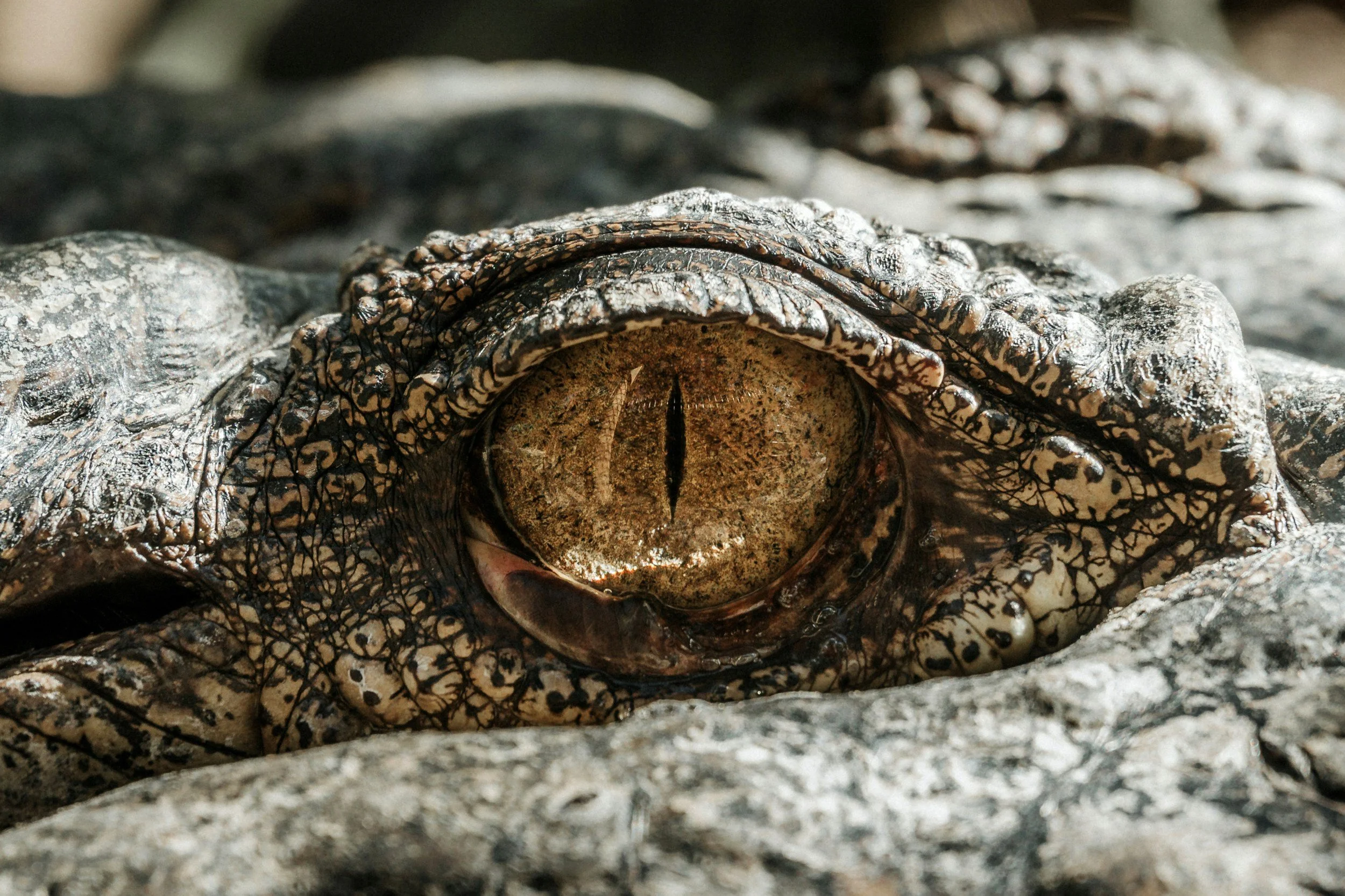
I saw the six alien eyes that had pupils like a cat’s. The hulking skull, with a thick brow ridge and deep ruts. A thin scar that crossed his snout, barely visible now. The vestigial gills on the side of his neck, much like a human tailbone; a mark of what the Moxon once were. The downward slant of his mouth, the thin but supple lips. That Moxons could smile, frown, and sneer made them more frightening to me, not less. Their expressions were nearly human, and yet wholly alien.
I took up my palette. I started with a sketch, using a thin brush and a dark evergreen paint, blocking in the basic shape of his face. He startled me by answering my unasked question.
“I wanted you because your paintings are filled with feeling,” he said. I paused, taking a moment to mix more paint and gather my thoughts.
“Would you indulge your servant with an explanation?” I asked. On my pallet I scraped together yellow and green, trying to get the right tone for the color around his eyes; lighter than the rest of his scales. Those eyes pierced me, but I held them. It was disrespectful to do, but I needed to see him to do my work. He did not scold me.
“Every planet we domesticate, the sentients have art of some kind. Even that poor creature you saw a moment ago, its people were barely better than beasts, yet they used the flesh of a native fruit to make images on the stone walls of the tunnels they lived in. And on every planet, I find one who can make art of me.”
“You want to see yourself in the way that we see you,” I said slowly.
He nodded. “Your species, for example, only two eyes. Small, no claws. What must I look like to you? I will know soon enough.” He turned to the window and continued eating, staring out at the planet he now owned.
I kept studying the Fleet Lord, focusing on the shape of his maw, the tiny spines that ran down his throat and into his wide, muscled chest. The Moxon relied on their advanced technology to dominate worlds, but their stature and heavily muscled bodies certainly helped. I used a dark brown tinted with blue to carve in the shadowed curve of his back and the thick, wide scales that covered his chest and arms. He was very still, moving only to lift his drink.
“Do you wish to see what I think you look like?” I asked, hesitantly. “Or my species?”
He shrugged, and I caught the rippling muscles beneath the scales, the sinuous twist of a shoulder wider than my hips. I made a quick mark on the canvas to highlight the power held in that round, hunched shape.
“Both. You are afraid; the air is tinged with the scent of it. Yet you are here, doing your work, in spite of fear,” he said. “I am curious, what do I look like to a creature like you? Others have hated me, or revered me. But your people fear, and yet you hope. Hope to be free of us, despite the gap in our technologies. Hope perhaps to beat us back, retake your planet, despite that cratered continent,” he said, gesturing carelessly to the planet below.
“I think we fear what you are capable of,” I said. “But I--”
He held up a claw. “Speak less,” he said. “Use your tools to tell. I wish to see, not hear.”

I nodded, a little nugget of determination hardening in my belly. I was afraid, there wasn’t any doubt about that. But I was also angry. And indignant, and proud of my species, my people. We were more than fear. I nodded to myself. I’d show him.
It was hours later when I stepped back from the canvas, my back and feet aching, my eyes gritty. In all that time the Fleet Lord had held still, without complaining once. I regarded the canvas, and a tremor entered my heart. I had painted him, but it was not flattering, not indulgent. My painting verged on disrespect. A deadly offense to the Moxon. What had gotten the Americans killed. That, and the wave of ineffective nukes they’d fired at this ship.
“You are done,” he said. It wasn’t a question. He rose slowly, stretching out his large form, and approached with the slow grace of a predator. I took a step back, my mouth opening to offer an explanation for what I’d made, or perhaps an apology. But he raised a clawed hand.
“I wish to see.”
He rounded the canvas. I held my breath.
I’d used the blue glow reflecting off of the Earth to light the Fleet Master. The lit side of him was jagged and hard, his scales a virulent yellow, his eyes glinting sharp, his claws tinged red from the meat he’d eaten, and the lives he’d taken. On this side, lit by the planet he conquered, he was fierce, undefeated, the Fleet Lord.
His other side was in shadow, and I used swirling blues and purples to show him what else I saw in him. That his six eyes were haughty, but foolish: used to overlooking things that he thought beneath him. Here his scales were not backed with hard muscle, but with stilted fat, bulging from excess and ill use. His claw was relaxed, unprepared: weak and unready to defend him. And where the dark and the light met, in that moment of conflict, I’d painted a question. Which of these creatures would he be to me, to humanity?
He studied the painting for minutes in silence. My heart thundered, and I was surprised he didn’t choke on the fear my body must have been spewing out. I had painted what I felt, but now I saw in every brush stroke and color that this painting was a challenge. And the Fleet Master knew it.
He turned to me, slow and deliberate, his claws clasped behind his back. The animal in me wanted to get away from him, to flee, to escape the danger. I held my ground, and met his six-eyed gaze.
He started to laugh. It was a crocodilian hiss, punctuated with his jaws snapping together. A shiss-shiss-shiss noise. He laughed, and I stood frozen, unsure what it meant.
“Yours is a spirited race,” he said finally. “Such defiance, in the stroke of a brush. I am pleased, Lacie Pyron. Thank you for this art.”
He took it and carried it to a far wall, one draped with a large furry pelt. He pulled the skin aside, revealing a small room beyond. Inside were a dozen depictions of him, some painted, others sculpted; one that looked to be chiseled from bloody ice. He carried my work to an empty spot on the wall and hung it.

I followed him inside, amazed that the same being could be shown so differently. On one side he was a conquering hero; the other an avenging monster, and death on silent feet. Invader, oppressor, liberator, hero, master, murderer, and in the middle of them all: my painting.
I’d painted the Moxon Fleet Master as something mortal. Not a god here to save us, or an avenging angel to punish us: but a fellow sentient. A foe, a challenger to our supremacy, but not something evil. No: instead, a chance to grow beyond what we were. To ascend. My painting said that the Moxon were not gods or monsters. But perhaps one day, they would be our peers.
I noticed the depictions seemed to be organized; the flattering ones on one side, the more monstrous on the other. Mine went in the middle.
“What happened to the species who made these?” I said, pointing at the portraits of him as a god-king.
“They serve us still,” he said. “Our claws broke their wills beyond repair. They could not pick themselves out of the dust.”
“And those?” I pointed at the ones where he was clearly a monster.
“All are extinct now. They could not abide servitude, but nor could they win. They died fighting. There is some honor in that, but not much.”
“And, in between?”
He smiled, and it seemed a much less frightening expression than it was before.
“I see in these a multitude. The wisdom to see what is; and hope to see what could be. Something beautiful, and dangerous.”
“Like you, Fleet Master.”
“And you, human.”
…..